

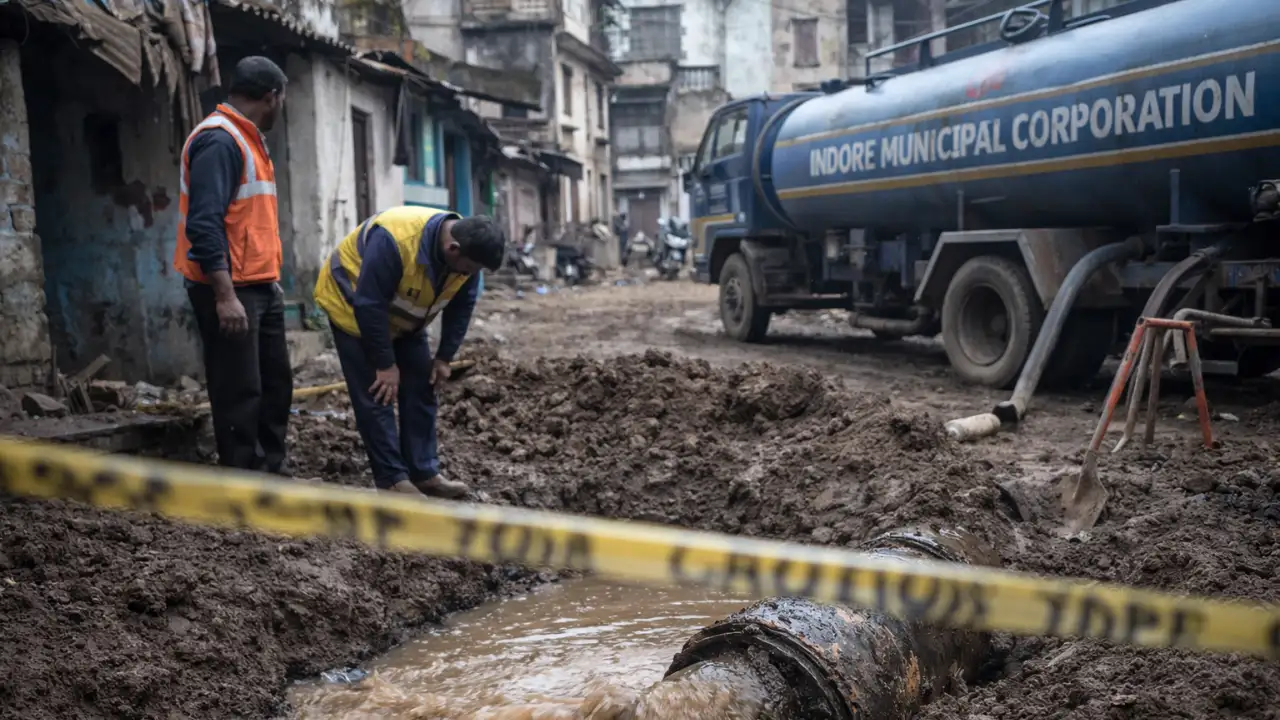

Bhopal: The human toll of Indore’s contaminated water crisis continues to mount, with the death count rising to 23 on Monday following the death of Bhagwandas Bharne (64), officials confirmed. Bharne, son of Tukaram Bharne, had been battling severe illness for nearly ten days after allegedly consuming contaminated water supplied to his locality.
According to family members, Bhagwandas was initially admitted to a private hospital before being referred to Bombay Hospital as his condition worsened. Doctors attempted to revive him with cardiopulmonary resuscitation (CPR) after he suffered a cardiac arrest and placed him on ventilator support. Despite intensive treatment, his health deteriorated rapidly, and he ultimately died due to multi-organ failure, the family said.
Earlier, another death linked to the outbreak was reported. Kamala Bai (59), wife of Tulsiram, reportedly began experiencing vomiting and diarrhoea around January 5–6. As her condition worsened, she was admitted to MY Hospital on January 7. She succumbed during treatment on January 9, hospital sources confirmed.
Fear and Disruption in Bhagirathpura
Even as investigations and relief efforts continue, panic remains high in Bhagirathpura, the area worst affected by the outbreak. Residents say they have almost completely stopped using tap water for drinking and cooking, relying instead on RO water, borewell supplies and bottled water.
Many households are now filtering and boiling water before use, turning what should be a basic civic service into a daily emergency routine. “We don’t trust the water anymore,” residents said, adding that fear and uncertainty have become part of everyday life.
Hospitals Under Strain
Hospital data highlights the continuing pressure on the city’s healthcare system. The number of patients in intensive care units (ICUs) has fluctuated over the past week — 10 patients on January 8, 11 on January 10, and 13 on January 11. For several consecutive days, three patients have remained on ventilator support, underscoring the severity of the illness in critical cases.
Medical staff say the condition of several patients remains unstable, raising concerns that the toll could increase further if the source of contamination is not conclusively addressed.
Questions Over Infrastructure and Accountability
The tragedy has sparked uncomfortable questions for Indore, a city that has received massive investments in water infrastructure under projects funded by the Asian Development Bank (ADB), along with the AMRUT scheme and the Smart City programme. These initiatives were aimed at strengthening water supply systems and ensuring safe, round-the-clock drinking water.
Despite these investments, contaminated water allegedly entered public pipelines and reached thousands of households. The incident has put the spotlight on monitoring mechanisms, maintenance failures and institutional accountability within the civic administration.
Residents Demand FIR and Action
Anger among residents has translated into legal action. People from Bhagirathpura have filed a petition demanding the registration of an FIR against officials they hold responsible for the crisis. The petition alleges that residents may have been consuming contaminated water for nearly two years, and that repeated warnings and complaints failed to prompt effective corrective measures.
The petition seeks stringent charges, including culpable negligence resulting in death, and calls for the removal of key officials from their posts until the investigation is completed. Petitioners argue that such steps are essential to ensure a fair, transparent and unbiased probe into one of the city’s worst public health crises in recent years.