


Lohri: January 13
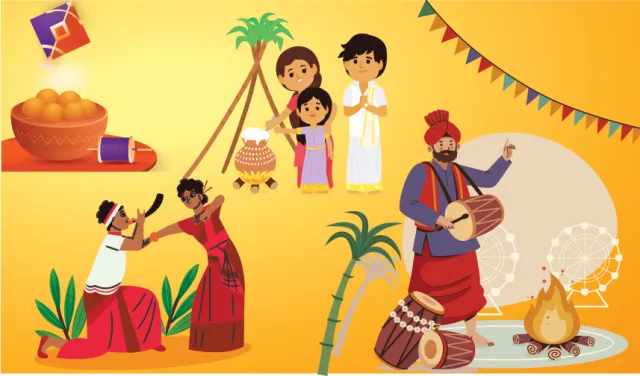
Celebrated mainly in Punjab and parts of North India, Lohri marks the end of winter and the harvesting of rabi crops. The festival is best known for its community bonfires, around which people gather to sing folk songs and perform energetic dances like Bhangra and Gidda.
Offerings of sesame seeds, jaggery, peanuts and popcorn are made to the fire, symbolising prosperity and gratitude for a good harvest. Homes come alive with traditional Punjabi dishes such as sarson saag, makki di roti, and popular winter sweets like gajjak and rewri. Lohri is also especially significant for newlyweds and families celebrating the birth of a child, adding to the festive cheer.
Makar Sankranti: January 14 (occasionally January 15)
Observed across India under different regional names, Makar Sankranti marks the Sun’s transition into Capricorn (Makar) and the beginning of Uttarayana, an auspicious phase in the Hindu calendar.
The festival is associated with harvest celebrations, holy river dips, prayers to the Sun God, and acts of charity. A key tradition is the exchange of sweets made from sesame seeds and jaggery, believed to promote warmth and harmony during winter. Kite flying, especially in states like Gujarat and Rajasthan, adds colour and excitement to the day.
Pongal: January 14–17
A major festival in Tamil Nadu, Pongal is a four-day harvest celebration dedicated to the Sun God and nature’s bounty. The festival takes its name from the ritual of boiling freshly harvested rice with milk and jaggery until it overflows — a sign of abundance and prosperity.
The four days of Pongal include:
- Bhogi – discarding old belongings to welcome new beginnings
- Thai Pongal – offering thanks to the Sun God
- Mattu Pongal – honouring cattle for their role in farming
- Kaanum Pongal – family gatherings and social bonding
Homes are decorated with intricate kolams, and traditional dishes such as sweet Pongal and Ven Pongal are prepared. In many parts of Tamil Nadu, the traditional bull-taming sport Jallikattu is also held as part of the celebrations.
Magh Bihu (Bhogali Bihu): January 14–15
In Assam, the harvest season concludes with Magh Bihu, also known as Bhogali Bihu, a festival centred on feasting and thanksgiving.
Communities build temporary huts called Bhelaghar and large bonfires known as Meji using bamboo and hay. People spend the night near these structures, cooking special delicacies, singing folk songs and performing traditional dances. The following morning, the Meji is lit, symbolising the end of winter and gratitude for a successful harvest.
A Shared Spirit of Gratitude
Though celebrated in different ways, all these festivals highlight a common Indian ethos — respect for nature, gratitude to farmers, and joy in togetherness. As January unfolds, these vibrant traditions bring warmth, colour and cultural unity to the cold winter days.