

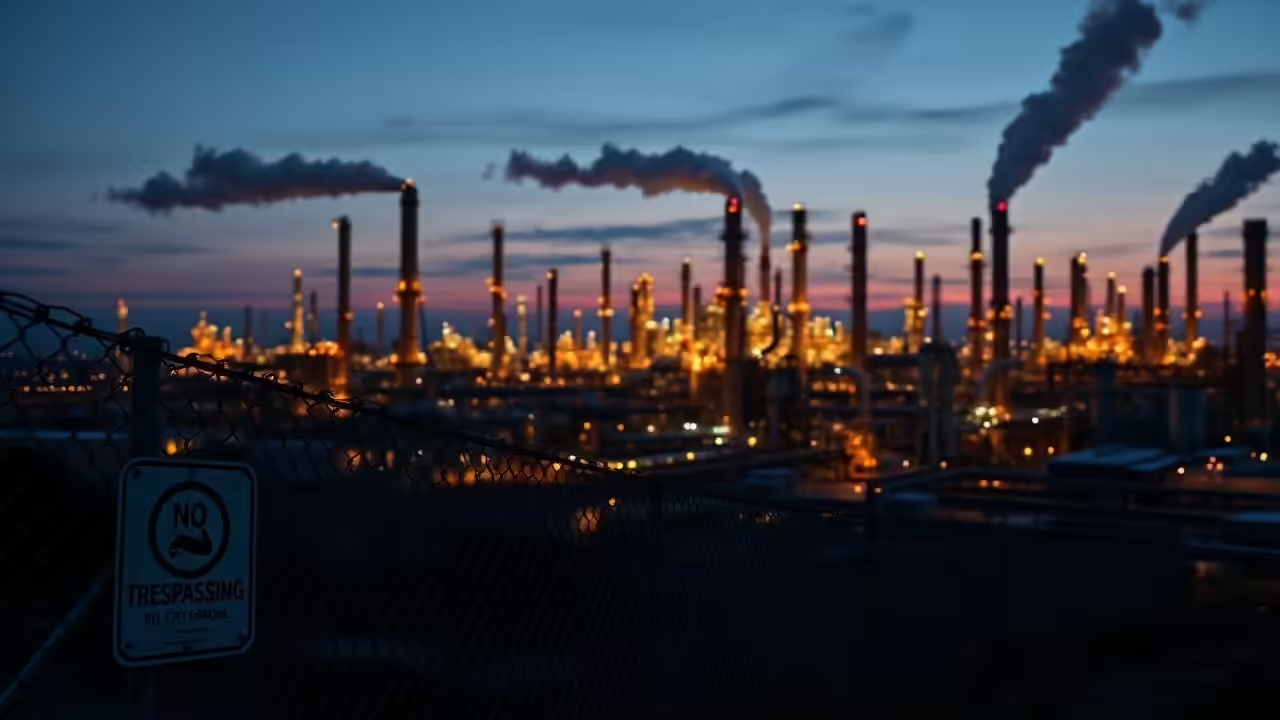

The dramatic removal of Venezuelan President Nicolás Maduro in a swift US special forces operation inside Caracas has reshaped global geopolitics overnight. Beyond the political shockwaves, the spotlight has firmly shifted to Venezuela’s greatest asset — its vast oil reserves, among the largest in the world.
With US President Donald Trump openly stating that Washington is prepared to temporarily “run” Venezuela until a political transition is completed, questions are mounting over the future of the country’s oil wealth. Trump’s assertion that major American corporations would soon begin extracting Venezuelan crude has triggered an intense global debate.
At the heart of the discussion are three key questions: how much oil does Venezuela actually have, how much money is at stake, and who will ultimately control this wealth — now and in the future?
Venezuela sits atop the Orinoco Belt, home to enormous reserves of heavy crude oil. While years of sanctions, mismanagement, and infrastructure decay have sharply reduced production, the underlying resource remains immense. Estimates suggest that, if fully developed, Venezuela’s oil could be worth trillions of dollars at current market prices.
Following the US-led operation that also detained Maduro’s wife Cilia Flores and other senior leaders, Trump described the military action as a “large-scale strike” necessary to stabilise the country. He argued that US oversight of oil production would help restore economic order, revive energy output, and ensure global energy security.
However, critics see a far more troubling picture. Analysts and international observers warn that direct control of Venezuela’s oil by American companies risks accusations of neo-colonialism and resource seizure under the guise of political transition. Latin American leaders and rival global powers are closely watching how Washington proceeds.
The fate of Venezuela’s state oil company PDVSA remains uncertain, as does the legal ownership of oil contracts signed under the previous government. Any attempt to redirect oil revenues could face challenges in international courts and provoke resistance from within Venezuela.
As the situation unfolds, Venezuela’s oil — long seen as a blessing that turned into a curse — has once again become the axis around which power, politics, and profit revolve. Whether this leads to economic recovery or prolonged instability will depend on who ultimately controls the taps.