

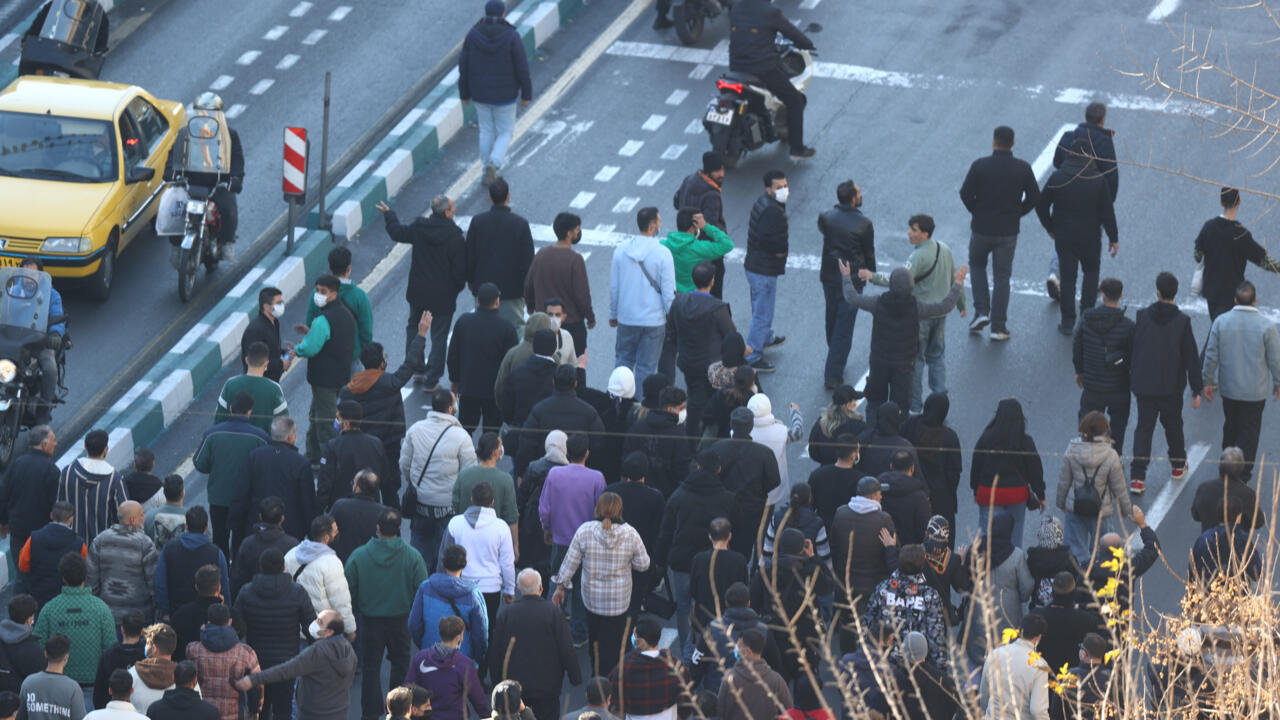

Tehran: Iran has been shaken this week by a fresh wave of protests that began in Tehran and have now spread to multiple cities, leaving at least six people dead in clashes with security forces. Despite the growing unrest, official state media has largely attempted to downplay the situation, even as countless videos continue to circulate across social platforms — some verified, others difficult to authenticate.
Why Are Protests Happening?
The demonstrations began on Sunday in Tehran after shopkeepers and traders went on strike, protesting soaring prices and severe economic stagnation. Iran’s economy has been battered for years by crippling international sanctions linked to its nuclear programme, resulting in runaway inflation, a collapsing currency, and daily financial hardship for citizens.
By Tuesday, the unrest intensified as university students joined the movement, organising protests in Tehran and the central cities of Isfahan and Yazd. Several merchants in Tehran’s historic bazaar also took part. According to a tally based on official and local media reports, demonstrations have now spread to 20 locations, mainly in western Iran.
In the southern city of Fasa, dozens gathered outside a government building, throwing projectiles and attempting to break down its gates, based on videos verified by AFP.
Powerful Slogans and Echoes of 2022 Uprising
Slogans such as “Death to the dictator” and “Woman, Life, Freedom” — chants that became internationally symbolic during the 2022 protests after the death of Mahsa Amini — have re-emerged, according to the US-based Human Rights Activists News Agency (HRANA). While AFP could not independently verify all footage, the echoes of past uprisings remain unmistakable.
Authorities ultimately crushed the 2022–2023 uprising through mass arrests and executions, keeping the Islamic Republic’s ruling structure intact.
Political and Regional Context
Analysts say protesters are not calling for minor reforms — they are demanding fundamental change.
“The protesters are very clear in their slogans — they are not looking for reform,” said US-Iranian human rights lawyer Gissou Nia of the Atlantic Council.
Iran faces mounting pressure both internally and externally. Regional rivals and the United States recently targeted Iranian nuclear sites and senior military officials during a 12-day conflict, intensifying tensions.
Former US President Donald Trump warned that Washington would respond forcefully if Iran harmed protesters, declaring the US “locked and loaded.” Meanwhile, Iran’s regional allies in Gaza, Lebanon, and Syria are under strain, affecting Tehran’s strategic influence.
Many Iranians are angered that despite domestic economic misery, the government continues to fund regional proxy groups such as Hezbollah. Some protest slogans reportedly included:
“Neither Gaza nor Lebanon, my life for Iran.”
Government Response
Deadly confrontations erupted on Thursday, marking the first confirmed deaths since protests escalated. Authorities temporarily closed schools, banks, and public offices, citing energy-saving and cold weather reasons — though many suspect the move aimed to reduce public gatherings.
Officials acknowledged economic grievances and announced several corrective steps, including replacing the central bank governor.
President Masoud Pezeshkian, seen as a reformist figure, warned that his government would face moral and religious accountability if it failed citizens, saying they would “end up in hell” if hardships persisted.
However, Supreme Leader Ayatollah Ali Khamenei, 86, has not yet made a public statement.
How Big Is This Movement?
Exiled opposition figures welcomed the demonstrations. Reza Pahlavi, son of Iran’s last Shah, called 2026 a “definitive moment for change,” while the National Council of Resistance of Iran claimed Iranians were determined to end religious tyranny.
Still, experts caution that these protests — though serious — are not yet at the magnitude of major uprisings such as the deadly 2019 petrol price protests, which engulfed around 100 cities.
“I doubt these protests alone can topple the regime,” said sociologist Azadeh Kian, though she acknowledged they represent serious and persistent unrest.
Yale University researcher Arash Azizi agreed, calling them the most significant protests since 2023, warning that as living standards continue to collapse, Iran should expect more waves of dissent.