

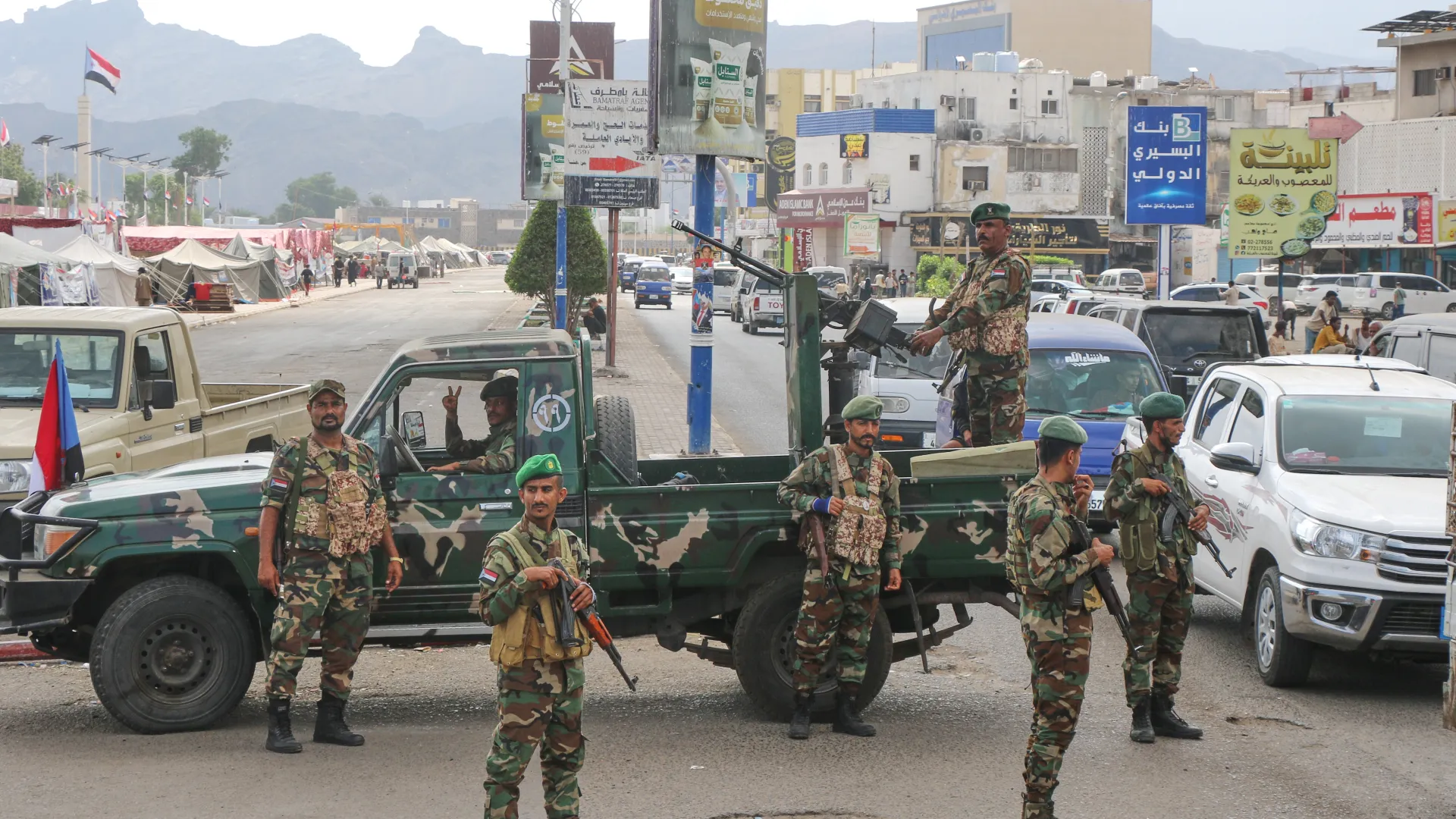

Southern Transitional Council unveils two-year transition plan to form “South Arabia” as 20 fighters reportedly killed in Saudi-led coalition strikes; rising tensions deepen rift between Saudi Arabia and UAE-backed forces.
Yemen’s UAE-backed separatist faction, the Southern Transitional Council (STC), has announced a two-year transition period toward full independence, even as it reported at least 20 fighters killed in fresh airstrikes launched by a Saudi-led coalition. The announcement marks a dramatic escalation in Yemen’s already fractured political and military landscape.
According to a separatist military official and medical sources, the fatalities occurred after coalition air raids struck two STC military bases. Additional locations, including an airport, were also targeted as part of the strikes.
The latest bombardments come after weeks of intensifying tensions between Saudi Arabia and the United Arab Emirates over the STC’s sweeping advances across southern Yemen. The group has captured large swathes of territory in Hadramawt and Mahra provinces, including resource-rich regions bordering Saudi Arabia and Oman.
STC Proposes Two-Year Transition to Form “South Arabia”
STC President Aidaros Al-Zubaidi announced that the separatists plan to establish an independent state named “South Arabia” within two years — reviving the north-south divide that existed before Yemen’s 1990 unification. The transition plan includes dialogue with Yemen’s north, currently controlled by Iran-backed Houthi rebels, followed by a referendum on independence.
However, Al-Zubaidi issued a stark warning, stating that the STC would declare independence immediately if dialogue fails or if southern territories face renewed attacks.
“This constitutional declaration shall be considered immediately effective before January 2, 2028, if our call for dialogue is ignored or if the people of the South or their forces are subjected to any military aggression,” he said during a televised address.
He also urged the international community to mediate talks between northern and southern factions.
Saudi-Led Coalition Launches Fierce Air Campaign
The Saudi-led coalition responded forcefully following the STC’s offensive. Airstrikes hit key sites, including Al-Khasha military camp and multiple checkpoints, reportedly paving the way for Saudi-backed forces to advance. Eyewitnesses described scenes of ongoing bombardment and rapid troop movement.
Friday’s deaths mark the first separatist casualties from coalition strikes since the STC launched its campaign.
Despite the military escalation, Hadramawt governor Salem Al-Khanbashi said the Saudi-backed operation was aimed at “peacefully” regaining control of key military installations, denying intentions to trigger further conflict.
Saudi military sources confirmed the strikes, warning they will continue until the STC withdraws from captured governorates.
UAE Withdraws Remaining Troops, Calls For De-escalation
Complicating the geopolitical dynamics further, the UAE — a key backer of the STC — confirmed it has now withdrawn its remaining troops from Yemen following the coalition’s recent strikes on an alleged UAE-linked weapons shipment. While denying the shipment contained arms, Abu Dhabi reiterated its commitment to peace efforts.
The UAE reaffirmed its stance on “dialogue, de-escalation, and internationally supported political processes” as the only viable path to lasting peace.
A Deepening Rift in a War-Weary Nation
The developments underscore widening fractures within the coalition backing Yemen’s internationally recognized government, headquartered in Aden and itself comprising multiple rival groups including the STC. Meanwhile, the Houthis — who seized the capital Sanaa in 2014 — remain firmly entrenched in northern Yemen despite a decade of war.
With the STC pushing for independence, Saudi Arabia and UAE supporting opposing power blocs, and the Houthis still dominant in the north, Yemen faces the stark possibility of formal fragmentation — potentially returning to its pre-1990 divided state.