

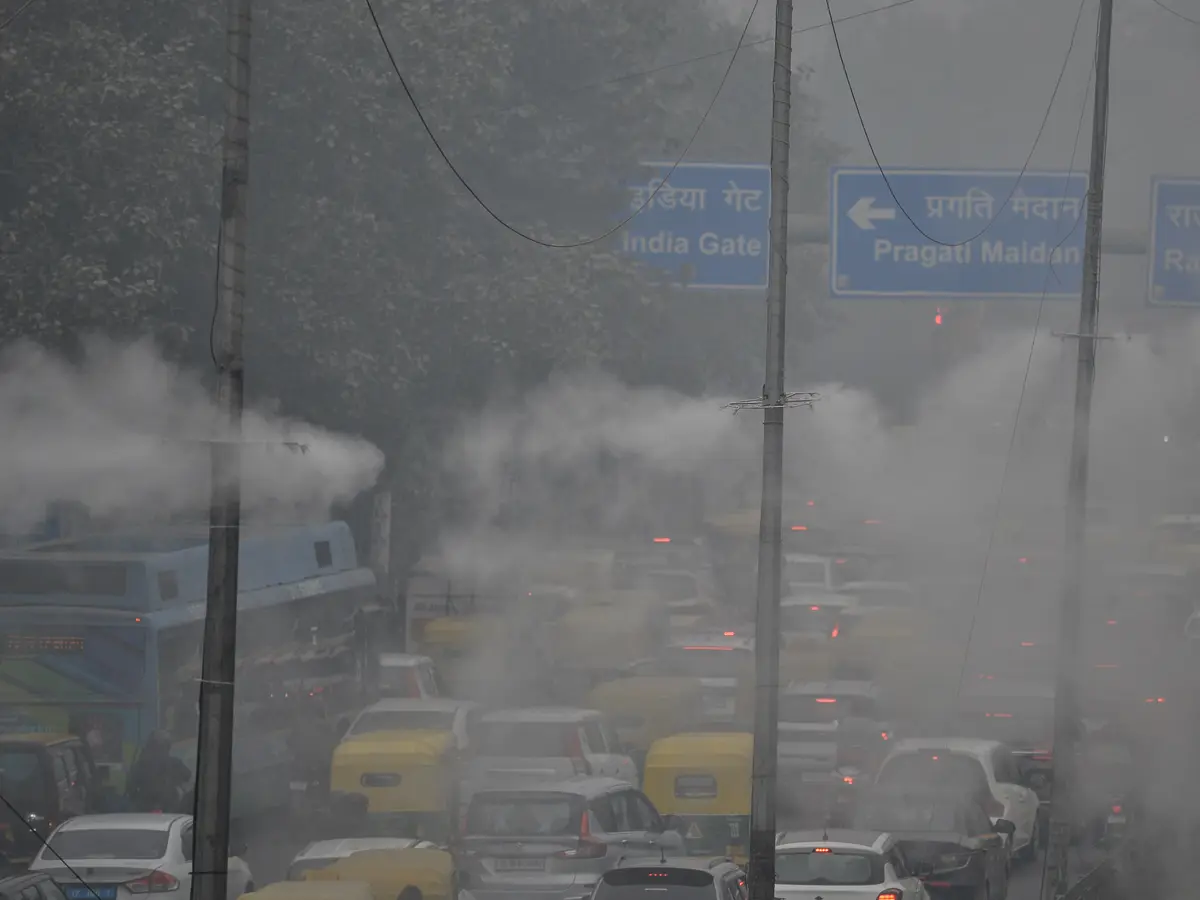

Delhi’s air quality plunged into the hazardous category on Monday morning, with the overall Air Quality Index (AQI) recorded at 403. The national capital continued to remain engulfed in toxic smog, following a day-long deterioration that began on Sunday, which initially started in the ‘very poor’ category but worsened significantly by night as pollution combined with dense fog.
Hazardous AQI Across Multiple Areas
According to data from the Central Pollution Control Board (CPCB), several areas in Delhi recorded extremely dangerous AQI levels above 400. These include:
• Anand Vihar – 458
• Ashok Vihar – 430
• Burari Crossing – 401
• Chandni Chowk – 426
• Jahangirpuri – 439
• Mundka – 416
• Narela – 404
• Okhla Phase-2 – 411
Experts have warned of serious health implications, especially for children, senior citizens, and individuals with respiratory or cardiovascular ailments.
Cold Wave and Dense Fog Grip Delhi
The weather department has issued an orange alert for December 29. Delhi is expected to witness a maximum temperature of around 22°C, while the minimum temperature is likely to dip to 7°C.
Dense to very dense fog conditions are expected to persist across parts of North India, including Himachal Pradesh, Punjab, Haryana, Chandigarh and West Uttar Pradesh till December 31. East Uttar Pradesh may see relief only after January 1.
CAQM Monitoring Situation, Meeting Likely
A senior Commission for Air Quality Management (CAQM) official confirmed that the situation is being closely monitored and a Graded Response Action Plan (GRAP) sub-committee meeting may be called if the AQI worsens further.
Currently, Stage-3 restrictions are in place, including:
– Ban on private construction
– Ban on BS-3 petrol vehicles
– Ban on BS-4 diesel vehicles
Stage-4 restrictions — lifted on December 24 — may be re-imposed if AQI crosses 450.
Government’s Stand
The Delhi Chief Minister’s Office stated that pollution control will not be effective without reducing the number of vehicles on roads. The government is pushing shared mobility and electric transport while increasing automated fitness testing for commercial vehicles to curb emissions.
Delhi Chief Minister Rekha Gupta reiterated that the city’s transport policy aims to reduce vehicular load while ensuring commuter convenience.