

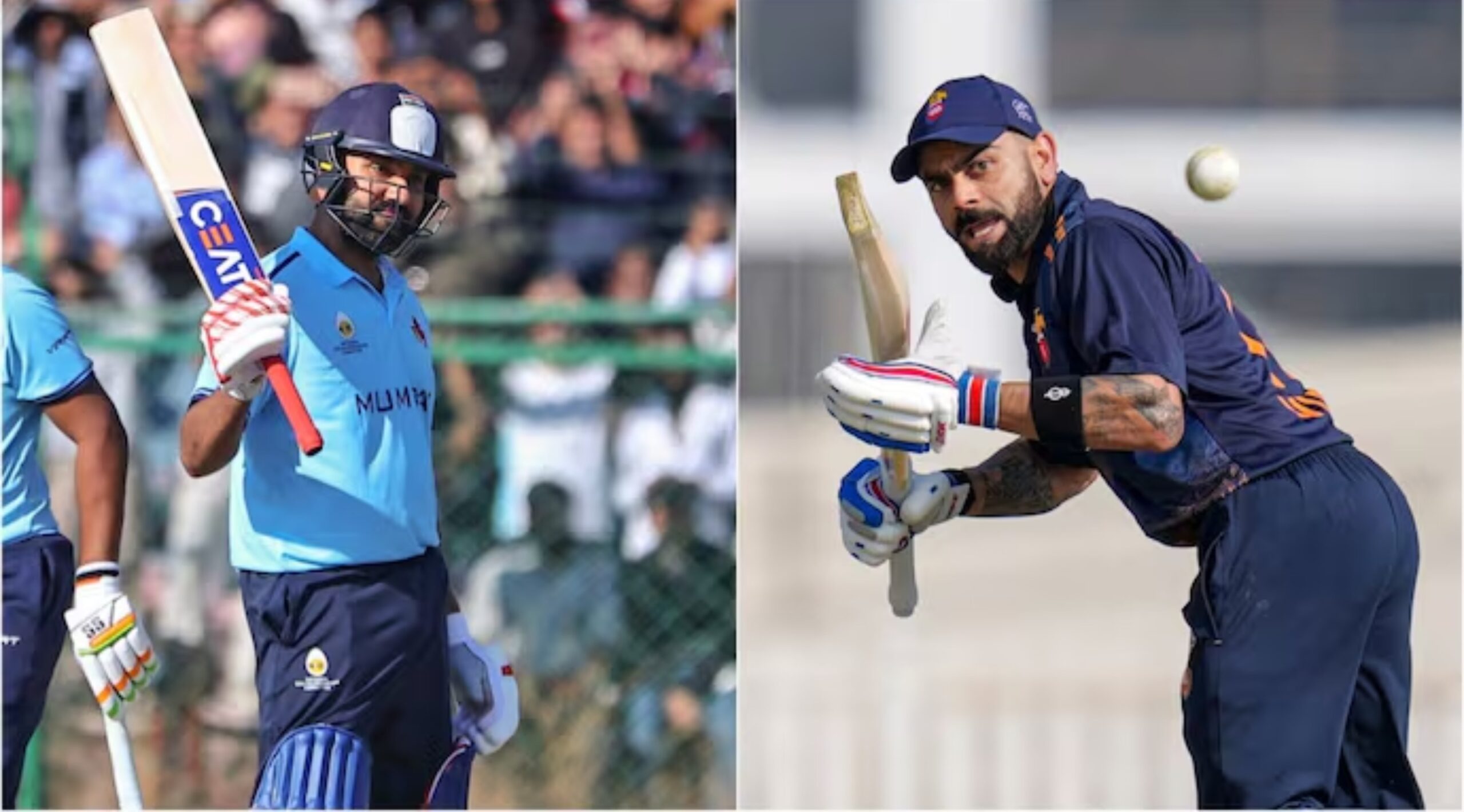

On a whirlwind Wednesday afternoon, the Vijay Hazare Trophy witnessed a collision of the past, present, and future of Indian cricket. While legends Rohit Sharma and Virat Kohli made a statement return to the domestic circuit, it was 14-year-old Vaibhav Suryavanshi who etched his name into the history books on a day when batting records were treated like mere suggestions.
The Return of the Icons: Rohit and Kohli Dominate
For the first time in over a decade, the “Ro-Ko” duo returned to inter-state 50-over cricket, largely due to a strict BCCI mandate requiring all available international stars (excluding Jasprit Bumrah) to play at least two domestic matches before the January series against New Zealand.
| Batter | Opponent | Runs | Balls to 100 | Key Highlight |
| Rohit Sharma | Sikkim | 155 | 62 | 10,000+ fans in Jaipur witnessed the carnage. |
| Virat Kohli | Andhra | 131 | 84 | Crossed 16,000 List-A runs, joining Sachin Tendulkar. |
Rohit Sharma turned the Sawai Man Singh Stadium in Jaipur into his personal playground. Facing a Sikkim attack that seemed more star-struck than competitive, Rohit breezed to a century in just 62 balls. Meanwhile, in the outskirts of Bengaluru, Virat Kohli showcased his trademark intensity. Despite a last-minute venue shift to the Centre of Excellence and a more potent Andhra attack, Kohli “schooled” the bowlers to reach his milestone in front of a quiet, empty ground.
The Future is Here: Vaibhav Suryavanshi’s World Record
While the veterans flexed their muscles, Vaibhav Suryavanshi provided the shock of the day. At just 14 years old, the Bihar opener became the youngest List A centurion in the history of the sport.
- The Feat: Smashed a century against Arunachal Pradesh.
- The Record: Surpassed the global record for youngest hundred-maker, proving why he is considered the “next big thing” in Indian cricket.
- The Context: Having already scored three T20 hundreds, Suryavanshi’s transition to the 50-over format was seamless, overshadowing even the biggest superstars for a brief, historic moment.
The Debate: Match Practice or “Method to the Madness”?
The success of Rohit and Kohli raises a valid question: Does playing against significantly weaker domestic sides actually benefit seasoned internationals?
- The Motivation Factor: For players like Kohli, who thrives on high-intensity “do-or-die” scenarios, finding the spark to face domestic attacks on flat tracks can be a challenge.
- Match Fitness vs. Quality: While “matchplay is better than nets,” as seen during Kohli’s “rusty” start in Australia last October, critics argue that these icons would be better served playing high-quality domestic cricket overseas (like County cricket) rather than “token” appearances in lopsided Indian domestic fixtures.
- The BCCI Diktat: The Board’s move ensures domestic cricket gets the limelight it deserves, as evidenced by the 10,000-strong crowd for Rohit, but it treats legends and rookies with the same brush—a policy that many feel needs a more nuanced approach.