

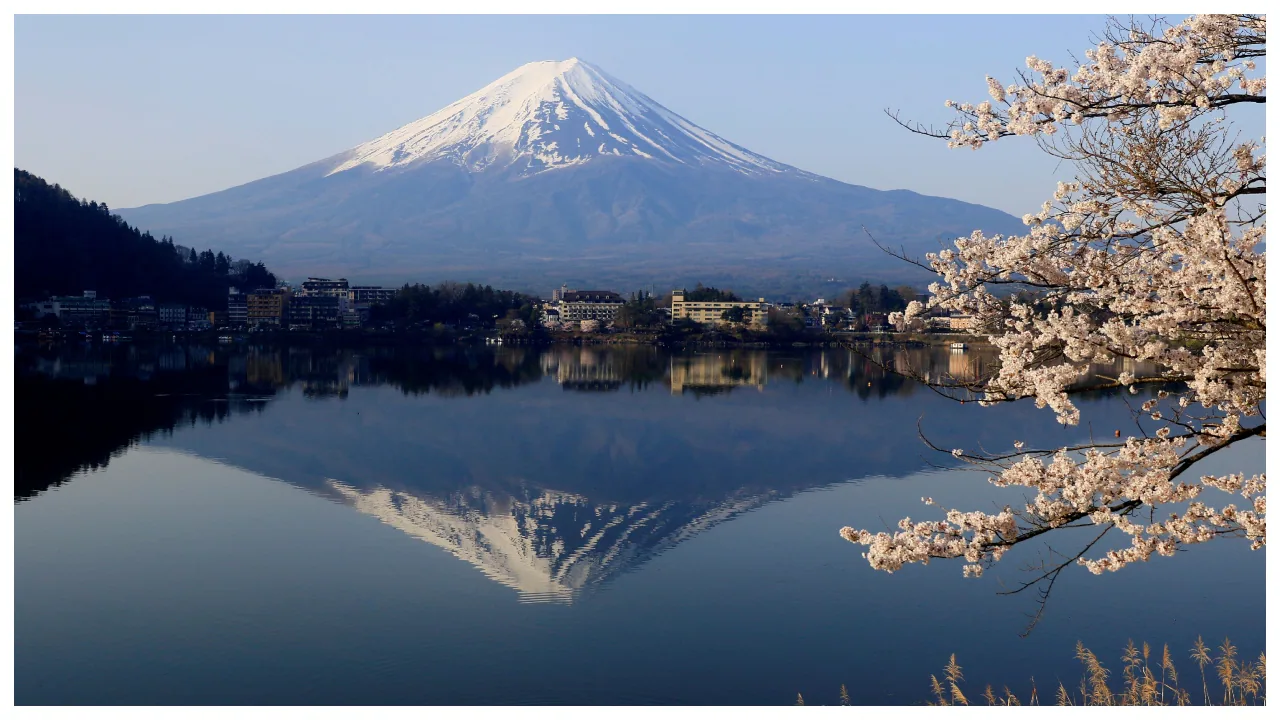

Tokyo: The Japan Meteorological Agency (JMA) said that the top of Japan’s holy Mount Fuji got its first snow of the winter on Thursday. The milestone came 21 days later than the long-term average since records began in 1894. However, it was two weeks earlier than in 2024, when snow fell on the 3,776-meter (12,388-foot) peak for the first time on November 7, which was the latest first snowfall ever recorded.
Mount Fuji is Japan’s tallest and most famous mountain, and it has a lot of cultural and artistic value. The snow-covered top of Mount Fuji is famous in works that will last forever, including Katsushika Hokusai’s “The Great Wave off Kanagawa,” which is now on the back of Japan’s new 1,000-yen banknote.
Recent Years’ Later Snowfalls
In recent years, Mount Fuji’s first snowfall has come later, but meteorologists are still not sure why. Mamoru Matsumoto from the Kofu observatory office of the JMA told Reuters last year that there are many things that could be causing this pattern, but no one has been able to pinpoint a single explanation yet.
Japan has also been dealing with rising temperatures and harsh weather. In August 2025, the country set a record high temperature of 41.8°C (107.2°F) in Isesaki, which is northwest of Tokyo.
What is Mount Fuji’s “First Snow”?
The Kofu observatory office says that Fuji’s “first snowfall” is officially defined as the first time after summer when all or portion of the mountain seems like it is blanketed in snow or exhibits symptoms of “white-looking solid precipitation” when viewed from below.
This year’s snow crown is a dramatic reminder of Japan’s seasonal change and Mount Fuji’s continued majesty as a symbol of endurance, spirituality, and natural beauty, even though it came later than usual.