

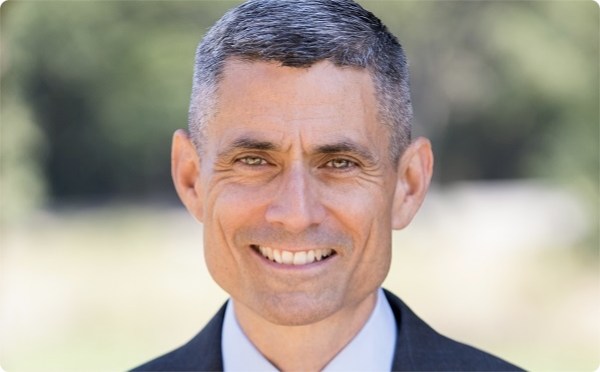

The United States Senate approved Indian-American scholar S. Paul Kapur to be the next Assistant Secretary of State for South and Central Asia on Tuesday. Kapur will be the main diplomatic representative for the United States in this important job. He will be in charge of relations with important countries in the region, such as India, Pakistan, and Afghanistan.
Kapur was born in New Delhi to an Indian father and an American mother. He has a PhD from the University of Chicago (1999) and studied at Amherst University before that. He has taught at well-known schools like Stanford University, the US Naval War College, and the US Naval Postgraduate School. His areas of expertise include South Asian security, nuclear strategy, and the foreign policies of India and Pakistan.
A Strong Supporter of the US-India Relationship
Kapur has been a well-known voice for a greater strategic engagement between the US and India. He wrote a study for the Hoover Institution in which he talked about the “inevitable quality” of the collaboration, which was based on shared strategic aims. He said that the need to keep the Indo-Pacific area free and open, balance China’s growing might, and boost wealth through economic cooperation gives both countries “very strong” reasons to work together.
Doubt about Pakistan’s strategy for dealing with militancy
The new Assistant Secretary is also renowned for being quite skeptical about Pakistan’s foreign policy, especially its employment of militant groups.
In his seminal book “Jihad as Grand Strategy,” Kapur says that Islamabad has used terrorism as a “extremely important tool” to fight India, which has a stronger military. He contends that “Militant forces… have served as Pakistan’s primary offensive tool,” instigating confrontations and perpetuating the Kashmir insurgency.
Kapur has always been against the US becoming closer to Pakistan in terms of security, saying that these measures are unlikely to lead to “strategic convergence.” In a 2023 article, he said that Islamabad had only been a “partial ally” in the fight against terrorism since it had worked against US efforts to pacify Afghanistan and helped the Taliban acquire control. He said that even though the government is cracking down on them, key leaders of Lashkar-e-Taiba (LeT) are still in Pakistan.
Kapur publicly questioned the Biden Administration’s decision to give Pakistan’s F-16 fighter jets a $450 million sustainment package in 2022. This caused a lot of controversy in India. He said that strengthening defense ties with Islamabad would hurt America’s trust-based relationship with New Delhi. He said that US authorities should “give up their decades-long dream of achieving strategic convergence between the US and Pakistan” and instead follow a policy of limited engagement with Islamabad to defend US strategic interests in the region.