

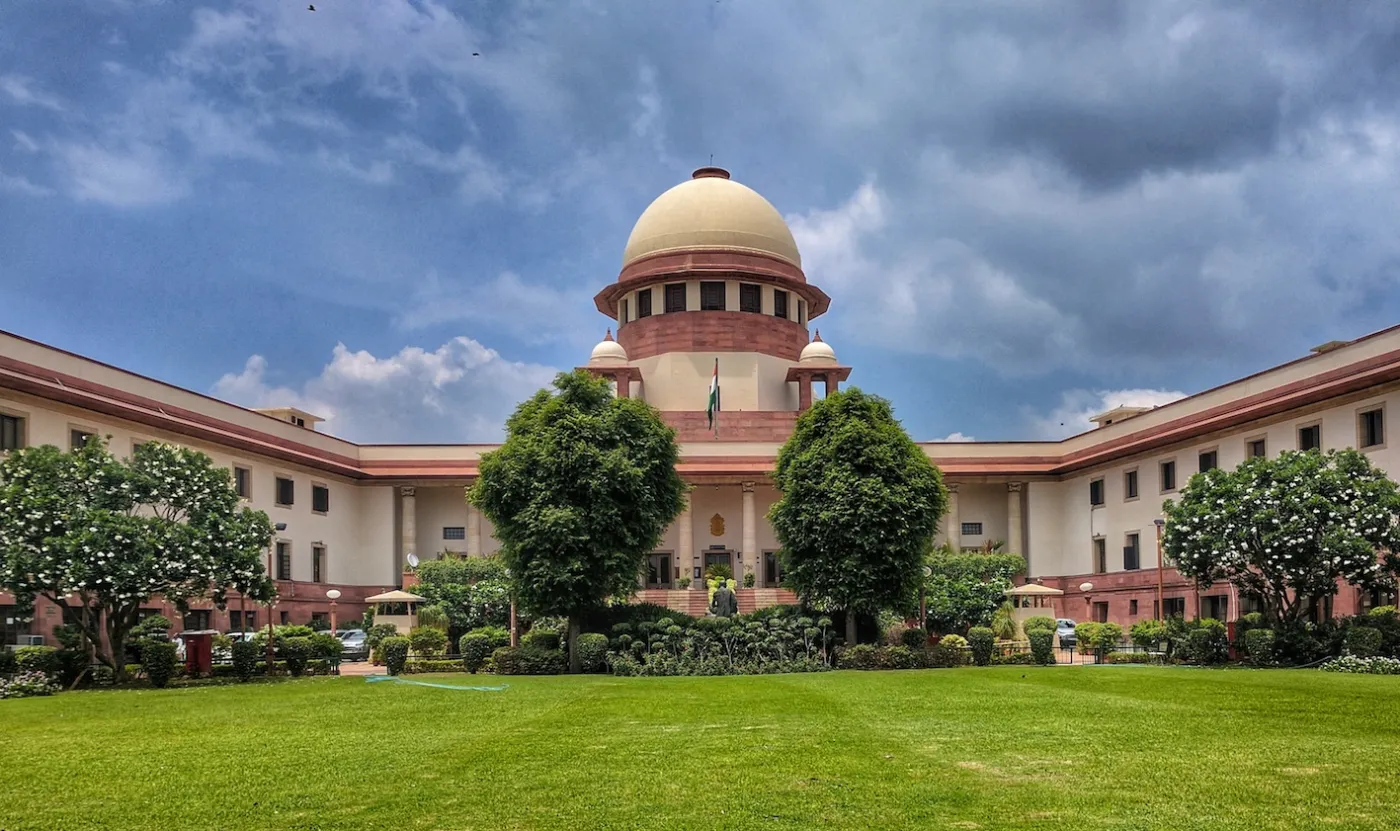

The Supreme Court of India reached a fair decision on Tuesday. It said that an artificial lake or man-made waterbody does not get the same legal protection as wetlands, but every government is still required to protect it. The “doctrine of public trust” says that this duty is in the best interest of the people and the environment.
The decision was made over the Futala Lake (also called Telangkhedi Tank) in Nagpur, which allows buildings surrounding it like a plaza, a floating restaurant, a musical fountain, and a gallery for people to watch.
Futala Lake is now considered man-made and not subject to wetland rules.
Justices K Vinod Chandran and NV Anjaria decided that the Futala Tank, which was built in 1799, was built by the ruler of Nagpur at the time mainly for irrigation purposes. It has a catchment area of roughly 200 hectares. The court said for sure, “Undoubtedly, the lake is a man-made lake for the city of Nagpur.”
This ruling was very important since it made the court agree with the Bombay High Court’s Nagpur bench’s judgment to turn down a request from the non-profit Swacch Association Nagpur. The group had fought the buildings, saying they broke the Wetlands (Conservation and Management) Rules, 2017. The Supreme Court said that the 2017 Rules do not include man-made bodies of water or bodies of water made for irrigation in the definition of a “wetland.”
The Public Trust Doctrine applies to man-made bodies of water.
The court threw out the petition for statutory wetland protection, but it gave the government a big job to perform by expanding the public trust doctrine.
Justice Anjaria, who wrote the decision for the bench, said that the public trust doctrine, which says that the state holds natural resources in public trust, “need not be limited to the natural bodies such as water bodies, wetlands, lakes, and rivers, which are nature’s gifts.”
Instead, the theory “holds true also with respect to the man-made or artificially created water bodies” that help keep the environment healthy. The decision said:
“All man-made or artificial bodies made from natural resources that help the environment and are eco-friendly must follow the public trust doctrine.”
Finding a balance between development and the environment
The Supreme Court’s judgment was an attempt to find the right balance between protecting the man-made lake and encouraging long-term growth.
Justice Anjaria said that applying the public trust theory to man-made lakes would eventually “pave the way to extend to ensure the availment of right of healthy environment and ecological balance recognized for the citizens under Article 21 of the Constitution.” He also said that this philosophy does not exclude fostering sustainable growth for the general interest.
The bench decided that the Futala Lake should stay in place for two reasons: to help the people of Nagpur and to be more environmentally friendly “without harming the waterbody or the quality of aqua life.”
News on the protection of statutory wetlands
The Supreme Court is also working hard on the bigger issue of protecting wetlands by law all around the country. In a different case heard on Tuesday, the bench (which included Justice Anjaria) learned that several States and Union Territories (UTs) are still finishing the court-ordered task of ground-truthing and marking the boundaries of inventoried wetlands.
According to an affidavit from the Center, ground-truthing has been finished for 189,270 of the 231,195 wetlands, and boundaries have been set for 112,460 of them. The Court gave the States and UTs more time, setting the next hearing on October 28. It also told the other States and UTs to finish the exercise by October 19.