

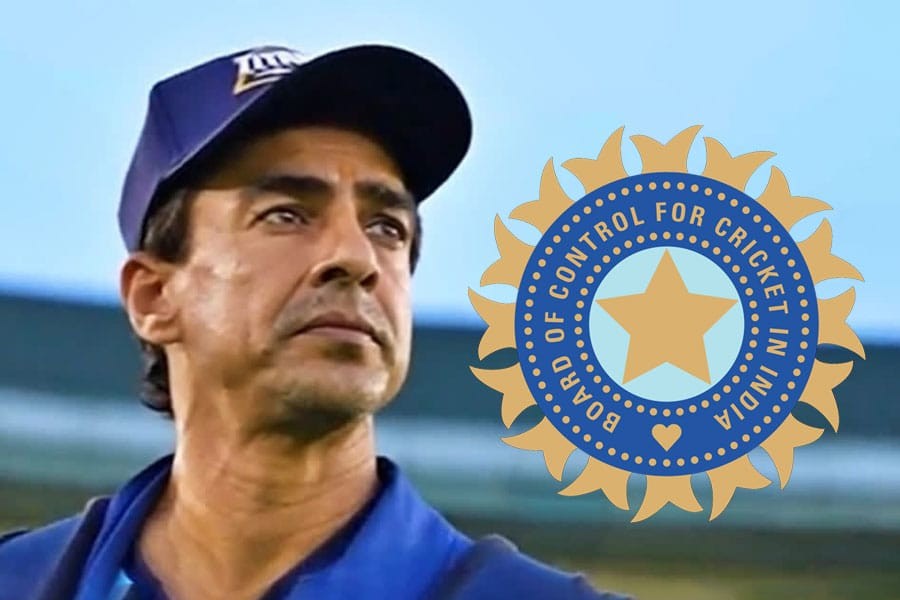

In a significant development for Indian cricket administration, veteran domestic cricketer Mithun Manhas was elected unopposed as the new President of the Board of Control for Cricket in India (BCCI). The election took place at the 94th Annual General Meeting (AGM) held at the board’s headquarters in Mumbai on Sunday. Manhas becomes the third consecutive former cricketer to lead the board, following Sourav Ganguly and Roger Binny.
Manhas Pledges Dedication and Vision
Addressing reporters after the meeting, the former Delhi skipper and domestic stalwart emphasized the gravity of his new role.
“It’s an absolute honour to be the president of the world’s finest cricketing board. At the same time it is a huge responsibility. I give the assurance that I will be committed to do it to the best of my ability, dedication and passion. My only agenda is to take BCCI and Indian cricket forward,” Manhas stated.
Manhas’ election, along with other key appointments, was formalized without a contest, reflecting the recent practice of finalizing office-bearers at an informal consensus meeting before the formal nominations.
New Look for Key BCCI Office-Bearers
The AGM also confirmed the unopposed election of other important office-bearers:
- Secretary: Devajit Saikia
- Treasurer: Raghuram Bhatt (former India spinner)
- Joint Secretary: Prabhtej Bhatia
- Vice-President: Rajiv Shukla
- IPL Chairman: Arun Dhumal
In another key internal move, Rohan Jaitley, the president of the Delhi and District Cricket Association (DDCA), was named chairman of the eight-member BCCI Infrastructure Committee. Former Saurashtra captain Jaydev Shah was also elected to the Apex Council.
Embracing Past Playing Experience
Manhas, Bhatt, and Shah all bring considerable playing experience in domestic cricket, a trend that is widely viewed as positive. Harbhajan Singh, who attended the AGM representing the Punjab Cricket Association, welcomed the development.
“When a cricketer heads a cricket body, his experience comes in handy. It’s a good thing that we have been seeing it for three terms now. Nothing is bigger for a cricketer than to be able to give back to the game,” said Singh, recalling his U19 days playing alongside Manhas.
Manhas, born in Jammu and having played a significant role in managing the cricket affairs of the Jammu and Kashmir Cricket Association (JKCA), was renowned as a domestic heavyweight who captained a stellar Delhi side featuring future internationals like Virender Sehwag, Gautam Gambhir, and Ashish Nehra.
Younger Selection Panel and Focus on Talent Research
In line with the drive for a fresh perspective, the India men’s selection committee was reconstituted with a focus on youth.
- Former India left-arm spinner Pragyan Ojha (39) and left-arm pacer RP Singh (39) were selected to replace S Sharath (52) and Subroto Banerjee (56).
- The newly formed Ajit Agarkar-led committee now has an average age of 43 years.
- The committee retains Ajay Ratra and SS Das alongside Chairman Ajit Agarkar (47).
The current panel members share a history on the field: Agarkar was Ratra’s teammate during his only Test hundred at Lord’s in 2002, and Agarkar and RP Singh were part of the 2007 T20 World Cup winning squad. Their immediate task will be to make crucial decisions shaping India’s ODI team in the lead-up to the next World Cup.
Revival of the TRDO Wing and Domestic Broadcasting
The AGM also saw discussions about potentially reviving the Talent Research Development Officers (TRDO) wing. This programme, which proved highly effective in the early 2000s, was credited with unearthing talent like MS Dhoni. The program’s revival aims to assist national selectors in spotting and grooming new talent outside of established cricketing centers.
Furthermore, the board addressed past criticism for not broadcasting some domestic matches (like the Duleep Trophy). The members were informed that the BCCI intends to live stream more domestic cricket going forward, leveraging the significant revenue from the recent jersey sponsorship contract with Apollo Tyres, valued at ₹579 crore for two and a half years.