

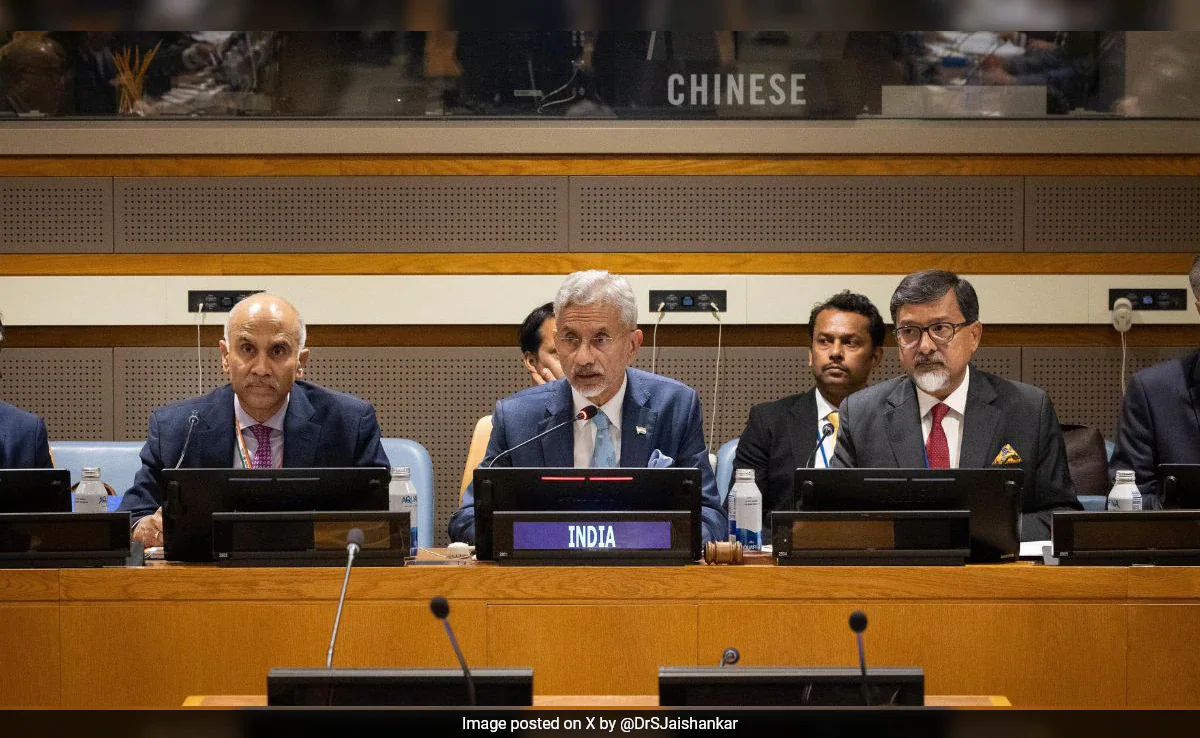

The BRICS Ministers of Foreign Affairs meeting, which took place on the sidelines of the 80th United Nations General Assembly (UNGA80) on Friday, was mostly about India’s upcoming BRICS Chairship in 2026, a strong stand against terrorism, a renewed push for UN Security Council (UNSC) reforms, and concerns about trade-restrictive measures.
External Affairs Minister S. Jaishankar led the meeting, which ended with a Joint Statement that showed everyone was behind India as it gets ready to take over the presidency next year.
India’s 2026 Agenda: The “Voice of Reason” for the Global South
The BRICS ministers officially gave India their “full support” for its role as the BRICS Chair in 2026 and for hosting the XVIII BRICS Summit in India.
Minister Jaishankar talked about his vision for the group, stressing that it should be a “voice of reason.” He talked on what he wanted to do during his time in office in 2026, such as:
Safety of Food and Energy
Change to Digital
Changes to the UN
Giving the Global South a louder voice
Strong Condemnation of Terrorism, No Tolerance Called For
The joint statement was a big step in diplomacy. It strongly condemned terrorism and explicitly mentioned the April 22 incident in Jammu and Kashmir’s Pahalgam that killed 26 people.
The ministers “reaffirmed their commitment to fighting terrorism in all its forms and manifestations,” and they specifically talked about cross-border migration, terrorism financing, and safe havens, saying they would have “zero tolerance” and not accept “double standards.” The direct mention of the incident, which is widely blamed on organizations backed by Pakistan, comes after India’s recent response to Pakistan’s “absurd theatrics” at the UNGA.
Push for India and Brazil to Get Permanent Seats on the UNSC Again
The meeting firmly backed the idea of changing the UNSC to make it “more democratic, representative, effective, and efficient.”
The joint statement backed New Delhi’s long-standing diplomatic drive, with China and Russia, both permanent members of the UNSC, making it clear that they supported it:
“Brazil and India’s desire to have a bigger say in the United Nations, including its Security Council.”
Worry About Trade Barriers and Protectionism
The BRICS group also said they were very worried about rising protectionist and coercive trade obstacles, which was a clear criticism of the US’s tariffs on Indian exports.
The ministers warned against “indiscriminate rising of tariffs and non-tariff measures” and other protectionist policies that “threaten to further reduce global trade, disrupt global supply chains, and introduce uncertainty.” They restated their commitment to a trading system that is founded on rules, doesn’t discriminate, and involves many countries, with the WTO at its center.
The foreign ministers of all current and new BRICS members were there, including Brazil, Russia, China, South Africa, Iran, Indonesia, the UAE, Ethiopia, and Egypt. This shows how the group’s power is growing.