

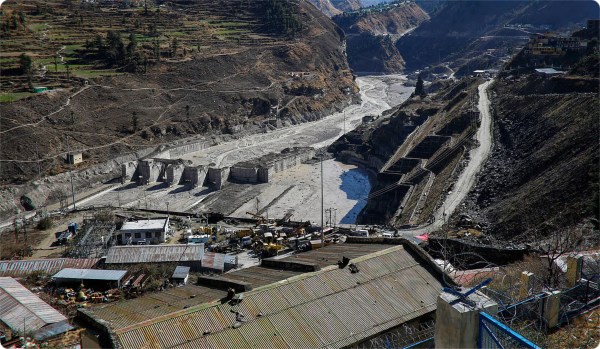

NEW DELHI – Former Union ministers Karan Singh and Murli Manohar Joshi, together with a group of historians, activists, and former government officials, have written to Chief Justice of India B.R. Gavai asking the Supreme Court to look again at its 2021 decision on the Char Dham project. The people who signed the letter said that the verdict, which allowed for a bigger road design, has caused a number of terrible landslides and floods in the Himalayan regions.
The letter says that if the decision isn’t looked at again, it will have a “irreparable and immediate impact” on the Bhagirathi Eco-Sensitive Zone (BESZ), which is the clean source valley of the Ganga River and the location of the recent sad Dharali accident.
A policy and outcome that don’t match
The appeal is based on the premise that the court’s ruling put the safety of the environment behind the need to build more infrastructure.
Widening Roads and Landslides: The people who signed the letter say that the court’s decision to widen roads to a 12-meter formation width (DL-PS) has caused landslides all over the place and made areas sink in the region. They point out that a report from June 2025 showed 811 landslide zones along the Char Dham project, most of which were generated by chopping down hills to make room for the enlargement.
The MoRTH Circulars: The letter brings up a big problem with how the government is doing things. It says that in 2018, the Ministry of Road Transport and Highways (MoRTH) sent out a circular saying that mountain roads should be 5.5 meters wide in the middle. In a September 2020 decision to safeguard the fragile Himalayas, the Supreme Court even agreed with this suggestion at first. On December 14, 2021, though, MoRTH sent out a revised circular saying that “defense needs” were the reason for changing this decision.
Ignoring Expert Advice: The appeal shows that the December 2021 decision is making it possible to widen the road in the very delicate Bhagirathi Eco-Sensitive Zone, which a High-Powered Committee (HPC) had specifically told them not to do. Even though this caution was given, a project has been given “in-principle” clearance.
Effects on people and the environment
The people who signed the letter link the court’s decision to a number of recent natural disasters, including as the Dharali avalanche and flash flood, cloudbursts in Chamoli, and huge landslides in Uttarakhand, Himachal Pradesh, and Jammu & Kashmir. The letter stresses that hundreds of lives have been lost, and the government of Himachal Pradesh has proclaimed the whole state to be “disaster hit.”
The plea also talks about the environmental costs of the projects. For example, one 8-kilometer stretch will require cutting down roughly 3,000 trees, which will affect 17 hectares of woodland. Another area of the same valley wants to take down 6,000 valuable deodar trees.
The letter ends by saying that the December 2021 decision was a rejection of “adequate judicial review” and that it pronounced “an unscientific, irrational circular… under the excuse of defense needs, as sacrosanct.” The people who signed the letter stress the need for a “disaster and climate-resilient approach” to protect lives, jobs, and the environment.