

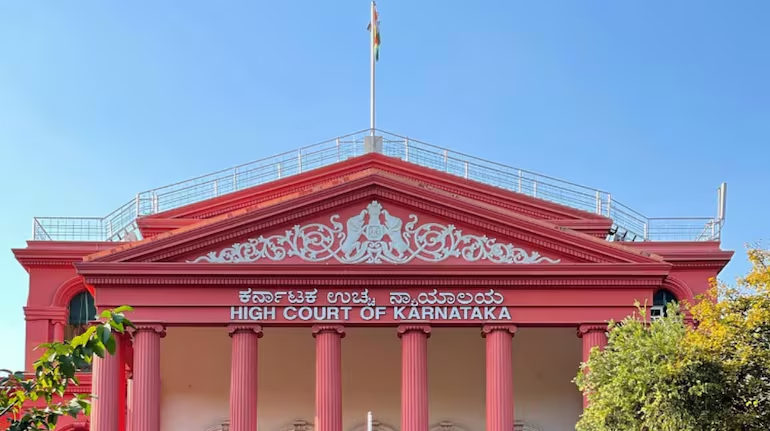

Bengaluru: In a significant ruling for the regulation of social media in India, the Karnataka High Court on Wednesday dismissed a petition filed by Elon Musk-led X Corp (formerly Twitter) challenging the central government’s ‘Sahyog’ portal and its power to issue content-blocking orders.
The court, presided over by Justice M. Nagaprasanna, held that social media platforms cannot operate with “anarchic freedom” in India and must adhere to the laws of the land. The verdict is a major setback for X, which had argued that the government’s use of the Sahyog portal and its authority to issue takedown orders under Section 79(3)(b) of the Information Technology (IT) Act, 2000, bypassed the procedural safeguards established under Section 69A of the same act and upheld by the Supreme Court in the landmark Shreya Singhal case.
The Sahyog portal, an initiative by the Ministry of Home Affairs, is a centralized platform designed to streamline and automate the process for government agencies to send content-blocking notices to social media intermediaries. The government had defended the portal as a crucial tool for combating cybercrime and ensuring a safer digital space for citizens.
In its ruling, the High Court strongly endorsed this view, stating that the Sahyog portal is “an instrument of public good” and not a “constitutional anathema.” The court emphasized that the regulation of information is essential, especially in cases of offenses against women, and that “unregulated speech under the guise of liberty becomes a license to lawlessness.”
The court also took a firm stance on X Corp’s argument that its rights were being violated, asserting that “American jurisprudence cannot be transplanted into Indian ideology.” Justice Nagaprasanna noted that while X complies with regulatory frameworks in the United States, it resists similar compliance in India, a position the court deemed “unacceptable.” The judge also pointed out that the protection of free speech under Article 19(1)(a) of the Indian Constitution is subject to reasonable restrictions under Article 19(2) and is a right granted to citizens, not foreign corporations.
The ruling affirms the government’s authority to regulate online content and underscores the principle that digital platforms operating in India must abide by the country’s laws and cooperate with law enforcement agencies through established mechanisms like the Sahyog portal.