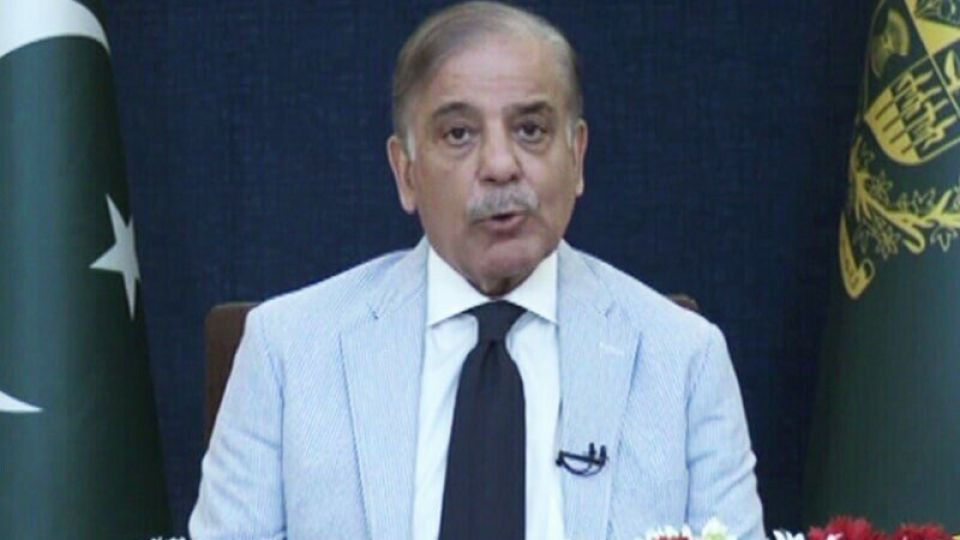
ISLAMABAD, Pakistan – Jawad S. Khawaja, the former Chief Justice of Pakistan, has filed a lawsuit for contempt of court against Prime Minister Shehbaz Sharif. He says that Sharif has not followed an important Supreme Court order from May 7, 2025, about the right of civilians convicted by military courts to appeal. The appeal, which was sent to the Pakistani Supreme Court on Monday, July 28, 2025, says that the government has broken a court decision that must be followed.
The Express Tribune says that Khawaja’s plea says that the Supreme Court told the federal government to change current laws or make new ones within 45 days. The goal of this law was to make sure that civilians who were found guilty by military courts could appeal their cases in a High Court on their own. Khawaja says that this order has not been followed.
“This is a simple case. The Supreme Court told the Federal Government to adopt the required changes or laws within 45 days so that the High Court can appeal verdicts made in court-martial cases. The petition says that “this direction has not been followed.”
Khawaja’s petition says that the federal government has purposely ignored a clear court order, and it blames Prime Minister Shehbaz Sharif, who is identified as the respondent, for this lack of action.
The petition also makes it clear that the courts are empowered to protect basic rights. It stresses that higher courts have the authority to tell federal or provincial governments to make sure that current laws are in line with constitutional guarantees and to enforce or issue relevant notices to make sure that this happens.
The petition goes on to say, “In cases of violation of fundamental rights, the Superior Courts are empowered to issue directions to the Federal Government or the Provincial Governments to bring the law in conformity with fundamental rights and enforce law and issue notification in that regard.” It also makes clear that the legislative and executive branches can be told to make changes to the legislation to make sure that constitutional rights are always protected.
The Supreme Court’s earlier decision on May 7 mostly affirmed the validity of sentencing civilians in military courts for crimes related to the May 9, 2023, riots, which were sparked by the arrest of former Prime Minister Imran Khan and led to attacks on military bases. Still, in that same 5-2 majority ruling, the court also underlined how important it is for lawmakers to act to maintain the right to appeal for people who are convicted by military tribunals. They said that this is necessary to uphold constitutional protections and requirements of a fair trial.
This contempt suit is a new legal challenge to how the government is handling the delicate topic of military trials for civilians. It also shows how the judiciary and the executive are still at odds in Pakistan.
Former Chief Justice Files Contempt Petition Against Pakistan PM Shehbaz Sharif Over Military Courts Ruling