

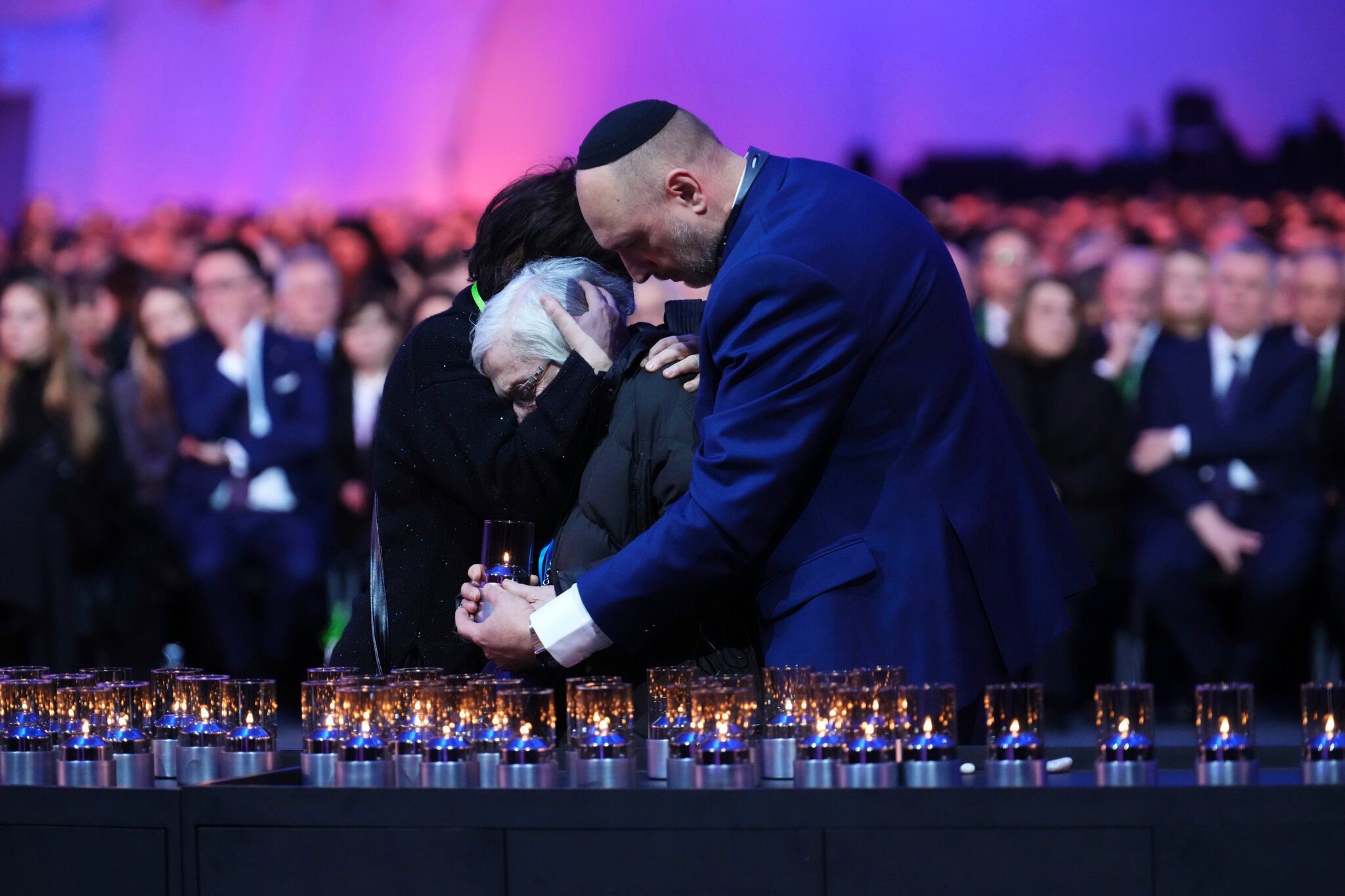

A solemn memorial service marking 80 years since the liberation of Auschwitz by Soviet troops took place on Monday at the site of the former death camp in Poland. The ceremony, widely considered the last significant observance attended by Holocaust survivors, was a poignant reminder of the horrors inflicted during World War II.
Key Highlights of the Commemoration:
- Survivors’ Presence:
- Among the attendees was Tova Friedman, 86, who was liberated at the age of six. She travelled from New Jersey to share her testimony and warn about the rise of antisemitism and hatred globally.
- Survivors, now mostly in their 80s and 90s, attended alongside family members, adding personal voices to this critical moment of remembrance.
- Historical Significance of Auschwitz:
- Auschwitz symbolizes the systematic atrocities of the Holocaust, where 1.1 million people were murdered.
- Victims included Jews, Poles, Roma, Soviet POWs, disabled individuals, and others targeted under Nazi racial ideology.
- International Representation:
- World leaders and royalty gathered at the memorial, highlighting its global significance:
- German Chancellor Olaf Scholz and President Frank-Walter Steinmeier attended together for the first time.
- French President Emmanuel Macron, Canadian Prime Minister Justin Trudeau, and Britain’s King Charles III were present.
- Kings and queens from Spain, Denmark, and Norway joined the observance.
- Ukrainian President Volodymyr Zelenskyy, who is Jewish, called for global vigilance to prevent hatred and forgetfulness.
- World leaders and royalty gathered at the memorial, highlighting its global significance:
- Polish President’s Tribute:
- Polish President Andrzej Duda lit a candle at the Death Wall, honoring those executed at Auschwitz. He emphasized Poland’s role as a “guardian of memory” and the unimaginable harm suffered by millions, especially Jews.
- United Nations Designation:
- International Holocaust Remembrance Day, established by the UN in 2005, is observed annually on January 27, commemorating the day Auschwitz was liberated in 1945.
Key Messages from the Event:
- Preserving Memory:
Survivors and leaders stressed the importance of remembering the Holocaust to prevent the repetition of such atrocities. - Combatting Hatred:
The rising tide of antisemitism and hate crimes was a central theme, with calls for unity and vigilance against prejudice.
Conclusion:
The 80th anniversary of Auschwitz’s liberation serves as a solemn reminder of humanity’s darkest chapter. As survivor numbers dwindle, the responsibility to preserve their stories and combat hatred falls increasingly on future generations.