

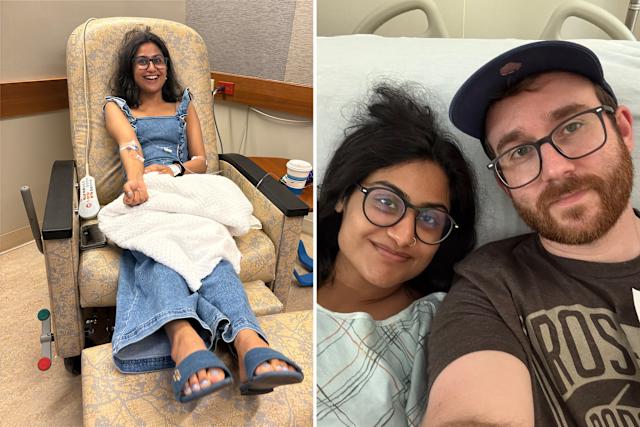

A 27-year-old woman diagnosed with advanced colorectal cancer has made a remarkable recovery in just four months thanks to a cutting-edge immunotherapy treatment, highlighting the growing promise of precision medicine in cancer care.
Mrinali Dhembla, a digital media strategist, was diagnosed with stage-3 colorectal cancer last year after experiencing symptoms such as rectal bleeding, persistent constipation and recurring low-grade fevers. Initially, she ignored the warning signs, assuming they were minor digestive issues.
However, by the time she sought medical attention, the aggressive cancer had already spread to her spine, making her condition far more serious.
Genetic Testing Reveals Lynch Syndrome
Doctors later discovered that Dhembla has Lynch syndrome, a hereditary condition that increases the risk of several cancers.
The syndrome occurs when the body fails to automatically repair DNA replication errors. Over time, these errors accumulate and can trigger cancer development.
Speaking about the moment she received the diagnosis, Dhembla said the news was deeply shocking.
“When I first heard the words ‘you have cancer,’ I was obviously very shaken. When you’re in your 20s, you think bowel disturbances are nothing serious and that you can just live through them,” she said.
Breakthrough Dual Immunotherapy Treatment
Instead of the traditional approach involving surgery, radiation and chemotherapy, doctors opted for a novel dual-immunotherapy treatment using Nivolumab and Ipilimumab.
This therapy was approved by the U.S. Food and Drug Administration last year and is based on research recognised with the Nobel Prize in Physiology or Medicine in 2018.
The treatment works by breaking down the tumour’s protective shield and activating the immune system so it can identify and destroy cancer cells.
Since Lynch syndrome makes tumours particularly vulnerable to immunotherapy, doctors believed the treatment could be highly effective in her case.
Doctors Witness ‘Remarkable Response’
According to Dr. Nicholas Hornstein, assistant professor of medical oncology at the Northwell Health Cancer Institute, the results were almost immediate.
“We started this immunotherapy and she’s had a pretty remarkable response,” Hornstein said.
He added that Dhembla’s immune system managed to accomplish what traditional treatments might not have achieved.
“Her immune system did what surgery, chemotherapy and radiation may not have been able to do. It’s a profound example of precision medicine — matching the right treatment to the right biology.”
Cancer-Free After Just Three Treatments
After only three infusions over four months, medical scans and biopsies revealed no evidence of cancer.
Her circulating tumour DNA — fragments released into the bloodstream by cancer cells — dropped dramatically from 300 to zero, confirming that the disease had been eliminated.
By July 2025, doctors officially declared Dhembla cancer-free.
Life After Recovery
Following her recovery, Dhembla relocated from New Hampshire to New York City so she could remain close to her doctor for ongoing monitoring.
She now visits Hornstein every three months for routine check-ups.
Doctors believe such treatments could significantly change cancer care in the future.
Hornstein noted that when the right therapy is matched to the right patient, precision medicine can deliver extraordinary results in a relatively short time — something that seemed unlikely just a few years ago.