

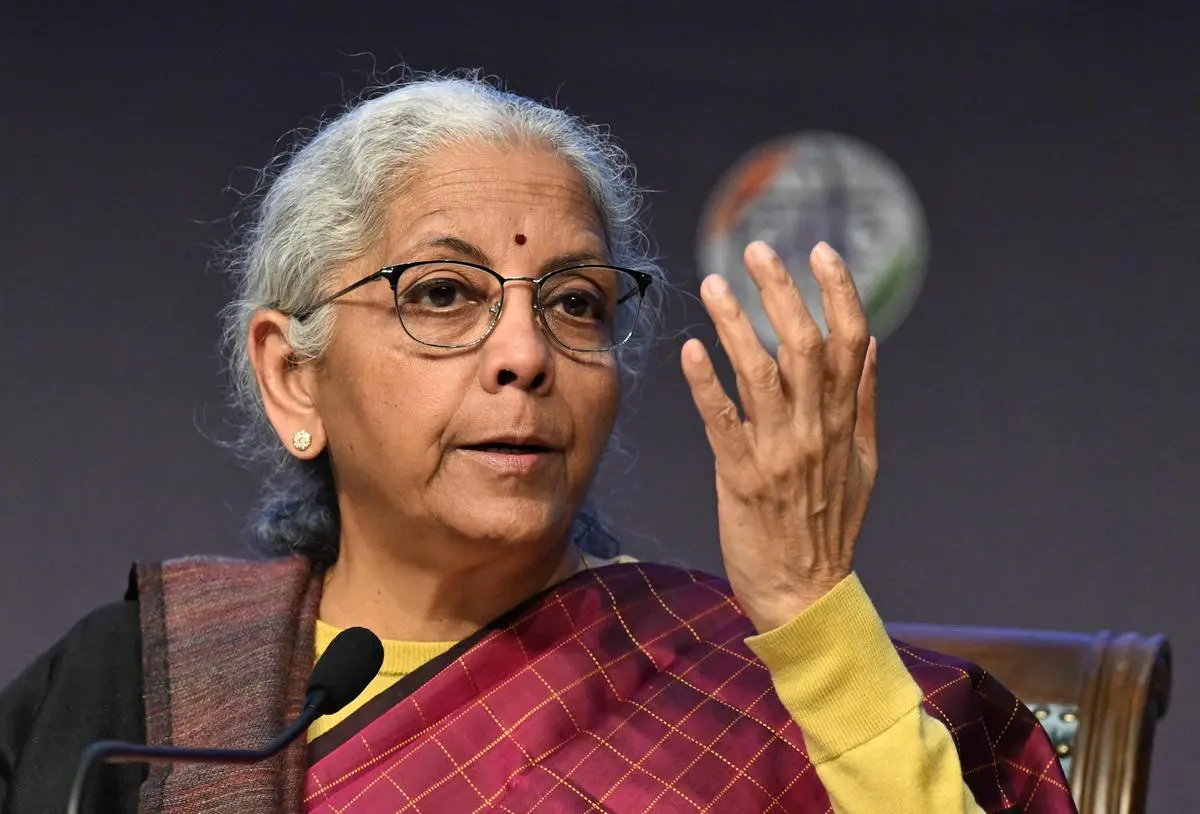

NEW DELHI — On Sunday, February 1, 2026, alongside the presentation of the Union Budget, Finance Minister Nirmala Sitharaman tabled the much-anticipated report of the 16th Finance Commission (FC), chaired by Arvind Panagariya. In a strategic move to quell rising tensions between the Centre and southern states, the government has accepted a formula that significantly rewards economic efficiency over purely need-based metrics.
1. The “Grand Bargain”: Vertical vs. Horizontal Devolution
The Commission has maintained a delicate balance between continuity and radical reform:
- Vertical Devolution (41%): The share of central taxes given to states remains at 41%, mirroring the 15th FC. This maintains fiscal stability for the Centre while ensuring states receive an absolute increase in funds as the economy grows.
- Horizontal Devolution (The Shift): The real story lies in how that 41% is split between states. The 16th FC has introduced “Contribution to GDP” as a new variable, effectively rewarding states that drive national growth.
2. The New Formula: Equity vs. Efficiency
The 16th FC has tweaked the weightage of the horizontal devolution formula to address the “southern rebellion” regarding fiscal fairness.
| Criterion | 15th FC Weight | 16th FC Weight | Change Note |
| Income Distance | 45% | 42.5% | Slightly reduced to accommodate growth. |
| Population (2011) | 15% | 17.5% | Increased to reflect current service needs. |
| Contribution to GDP | 0% | 10% | New Variable: Proxy for efficiency & tax effort. |
| Demographic Perf. | 12.5% | 10% | Now uses 1971–2011 growth, not TFR. |
| Area | 15% | 10% | Reduced to favor dense, high-growth states. |
| Forest & Ecology | 10% | 10% | Retained to reward environmental preservation. |
3. Winners and Losers: The Shifting Revenue Map
The introduction of the GDP variable and the recalibration of demographic performance has created a clear divide in the 2026–31 award period:
- The Gainers (Southern & Industrial States):
- Karnataka (+48 bps): The biggest beneficiary of the GDP contribution metric.
- Kerala (+46 bps): Saw a major jump due to revised demographic indicators.
- Gujarat & Haryana: Both saw significant gains of 28 and 27 bps respectively.
- The Losers (Populous & Central States):
- Madhya Pradesh (-50 bps): The largest drop in share among all major states.
- Uttar Pradesh (-32 bps) & Bihar (-11 bps): Despite their high needs, their shares were trimmed to fund the “efficiency” reward for others.
- West Bengal (-31 bps): Faces a significant revenue squeeze under the new formula.
4. Major Policy Changes: The End of “Revenue Deficit” Grants
The 16th FC has signaled an end to the “hand-holding” era for states with persistent fiscal gaps:
- Grants Scrapped: Revenue deficit grants, sector-specific grants, and state-specific grants have been discontinued.
- The Logic: The Commission argued these grants offer a “perverse incentive” for states to avoid difficult fiscal reforms, such as rationalizing subsidies or improving tax administration.
- Local Bodies: A massive ₹1.4 lakh crore has been earmarked for FY27 for local bodies and disaster management, but these are now strictly performance-linked.